The festival
About Chhath Puja
Chhath is one of the oldest surviving Vedic-era observances still kept exactly as it was: four days of fasting, purity and gratitude offered to the sun.
Chhath Puja is dedicated to Surya, the Sun, and to Chhathi Maiya, and is observed on the sixth day of the lunar month of Kartika — chhath means “six”. It is celebrated across Bihar, Jharkhand, eastern Uttar Pradesh, Chhattisgarh, Madhya Pradesh, Odisha, Bengal, Nepal and today wherever those families have settled.
It is unusual among Hindu festivals: there is no temple, no idol and no priest. The vrati — most often a woman, but men keep the vrat too — fasts without food or water for roughly 36 hours and offers arghya to the setting sun and again to the rising sun, standing in the water. Thanking a setting sun before a rising one is the whole idea of the festival: gratitude before request.
The offerings are prepared at home under strict cleanliness, carried to the ghat in bamboo baskets, and shared afterwards as prasad. Nothing about it requires wealth or status, which is why it has survived unchanged for so long.
Chhath in Houston
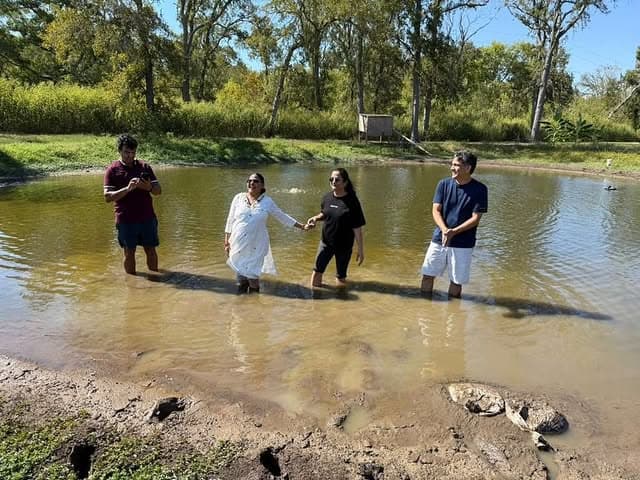
We keep the same four days at Jagannath Hindu Temple of Rosenberg (JHTR), with the temple pond prepared as a ghat so vratis can offer arghya standing in water.
The four sacred days
Each day has its own rituals, building toward the two arghyas.
Day 1
Nahay Khay
नहाय खाय
The vrati bathes in the river or at home, and the household cooks a simple satvik meal — usually kaddu-bhaat with chana dal, without onion or garlic. The kitchen is cleaned out and from here on everything is prepared with strict purity.
Day 2
Kharna
खरना
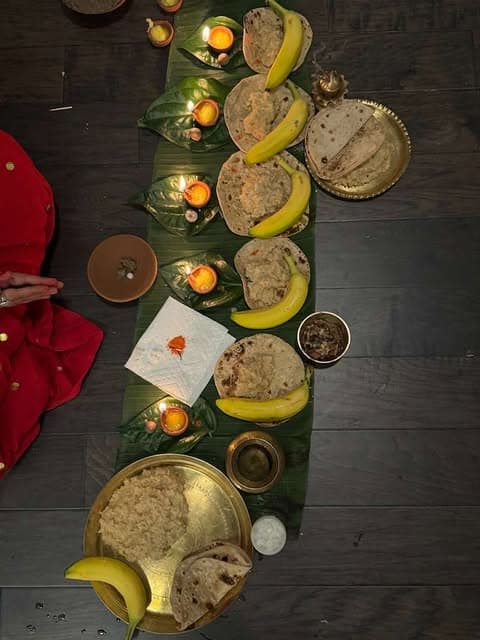
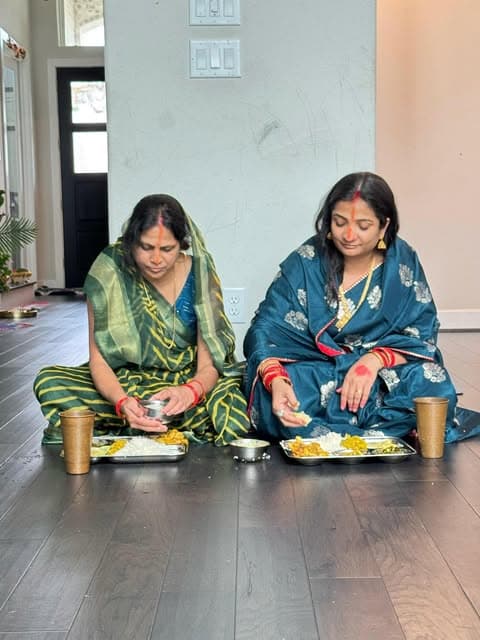
A day-long fast without water, broken only after sunset with kheer made of jaggery and rice, roti and fruit. The vrati eats alone in silence; once that meal ends the nirjala fast of about 36 hours begins.
Day 3
Sandhya Arghya
संध्या अर्घ्य
The main evening at the ghat. Families carry soop and daura filled with thekua, sugarcane, coconut and fruit, and the vrati stands in the water to offer arghya to the setting sun. Folk songs carry through the evening and lamps are floated after the offering.
Day 4
Usha Arghya
उषा अर्घ्य
Everyone returns to the ghat before dawn. Arghya is offered to the rising sun, the vrati takes blessings and breaks the fast with prasad — the parana — and thekua is shared with everyone present.
Rituals and customs
Standing in water
The vrati offers arghya waist-deep in water, facing the sun. It is why Chhath needs a ghat, and why we prepare the temple pond rather than moving the ritual indoors.
Thekua and prasad
Wheat flour and jaggery thekua, sugarcane, coconut, banana and seasonal fruit, prepared at home with the strictest cleanliness and offered in bamboo soop and daura.
Chhath geet
The folk songs — Kelva ke paat par, Ugah he Suruj dev, Kanchhi hi baans ke bahangi — are as much part of the festival as the ritual itself.
No priest, no idol
There is no murti and no priest mediating the worship. The offering goes directly to Surya and Chhathi Maiya, made by the family itself.
Sun and season
Chhath falls just after Diwali, at the turn of the season. The rituals are built around sunrise and sunset, and around water — the two things the festival treats as sacred.
Discipline
The nirjala fast, the cleanliness of the kitchen and the barefoot walk to the ghat are all part of the same practice of restraint the festival is known for.
Family and community
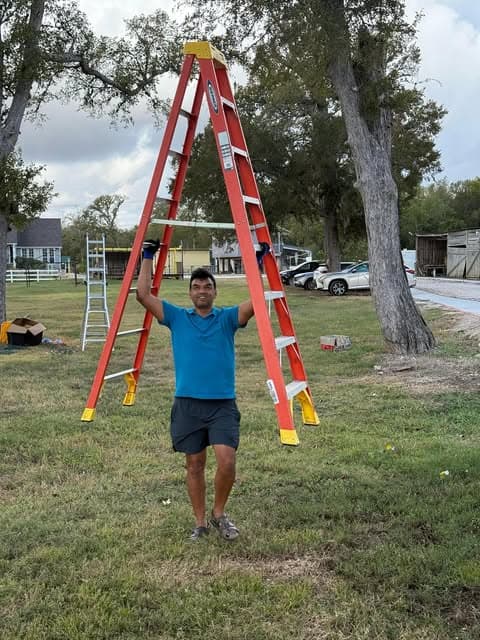
One family cannot do Chhath alone — neighbours help prepare prasad, carry the daura and hold the ghat together. That is exactly what we are recreating in Houston.
From our ghat